Story
The bugyal lands of Uttarakhand are the region's oldest working farms: rolling high pastures that give a family its fodder the way a field gives grain. Walk their calendar through a full year - the climb, the chhani, the haying, and the twelve-year pilgrimage that passes through Bedni.
You trekkers call them meadows. We call them bugyal - and I have watched enough first faces at first sight to tell you the word is exactly right. A bugyal is a high-altitude grassland rolling green above the treeline, and in Uttarakhand it is not scenery. Ali bugyal, Bedni bugyal, Garson bugyal, the ski-country meadow of Auli, and the soft green amphitheatres of Chamoli and Bageshwar - these are the hill year's granaries, grain stored in the form of grass, and a family's wealth has been counted here for centuries in generations of fodder. If the terraced fields below feed the household, the bugyal feeds the herds; and the herds, in their turn, feed the household back in milk, wool and fuel. Take away the meadow and the whole mountain economy closes like an unbreaded book.
So let me give you the calendar the way a shepherd keeps it, because the bugyal is not a place on a map - it is a schedule that twelve centuries of families have agreed to keep without ever once writing it down. Winter lives low. Down in the valley the flocks spread themselves over the stubble fields, eating what the autumn threshing left, while every conversation bends toward the same anxious point: how heavy the snow cross will be when the spring climb comes. Nobody says the word climb with a smile in November. In winter the bugyal above is a closed ledger, chewed by wind, kept for the summer, and guarded by cold that needs no wardens.
Then March, and the great ascent. Whole villages move with the flocks - children small enough to have to carry lambs so they do not give out on the first day; grandmothers' chutneys tied in a cloth; the largest bell of the herd worn by the animal that has never once lost the group. The climb takes a full two days minimum, often more with lambs. It is walked at the pace of the weakest sheep in the herd, because a herd, they will tell you if you ask at the wrong time, is only as fast as its slowest member. And this refusal to hurry is not weakness - it is the unwritten constitution of the mountains: the meadow will be as rich next spring as the march today is kind.
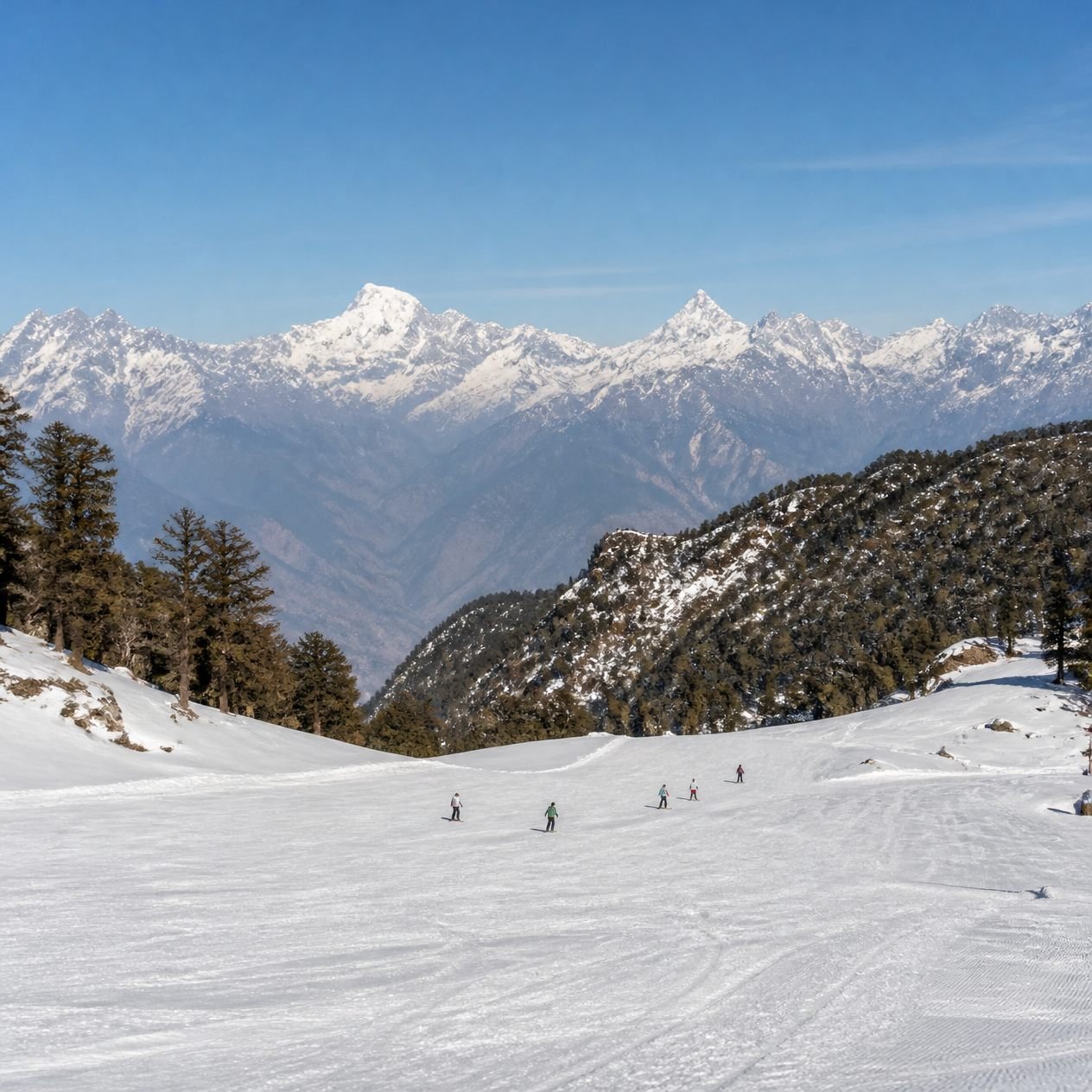
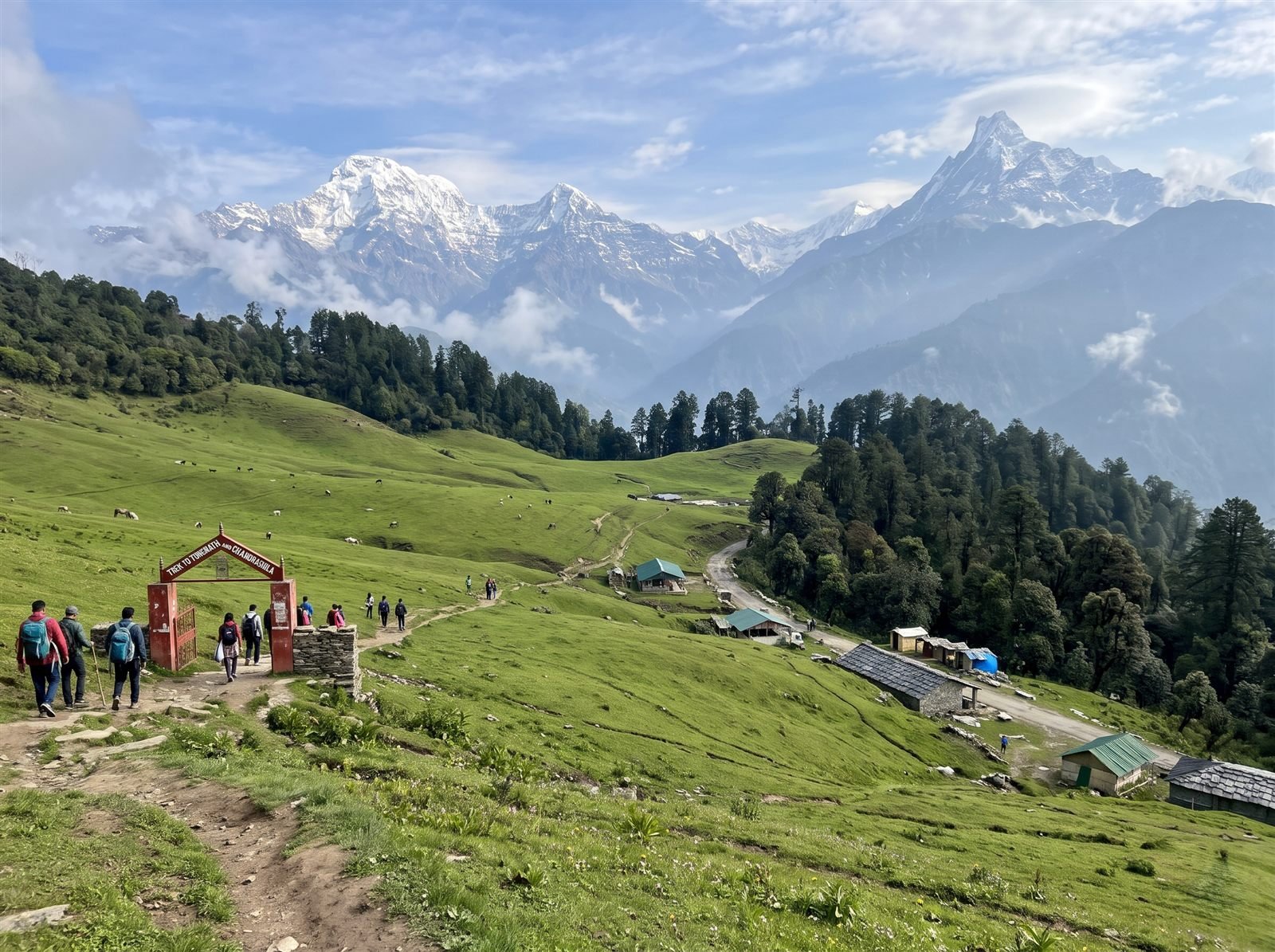
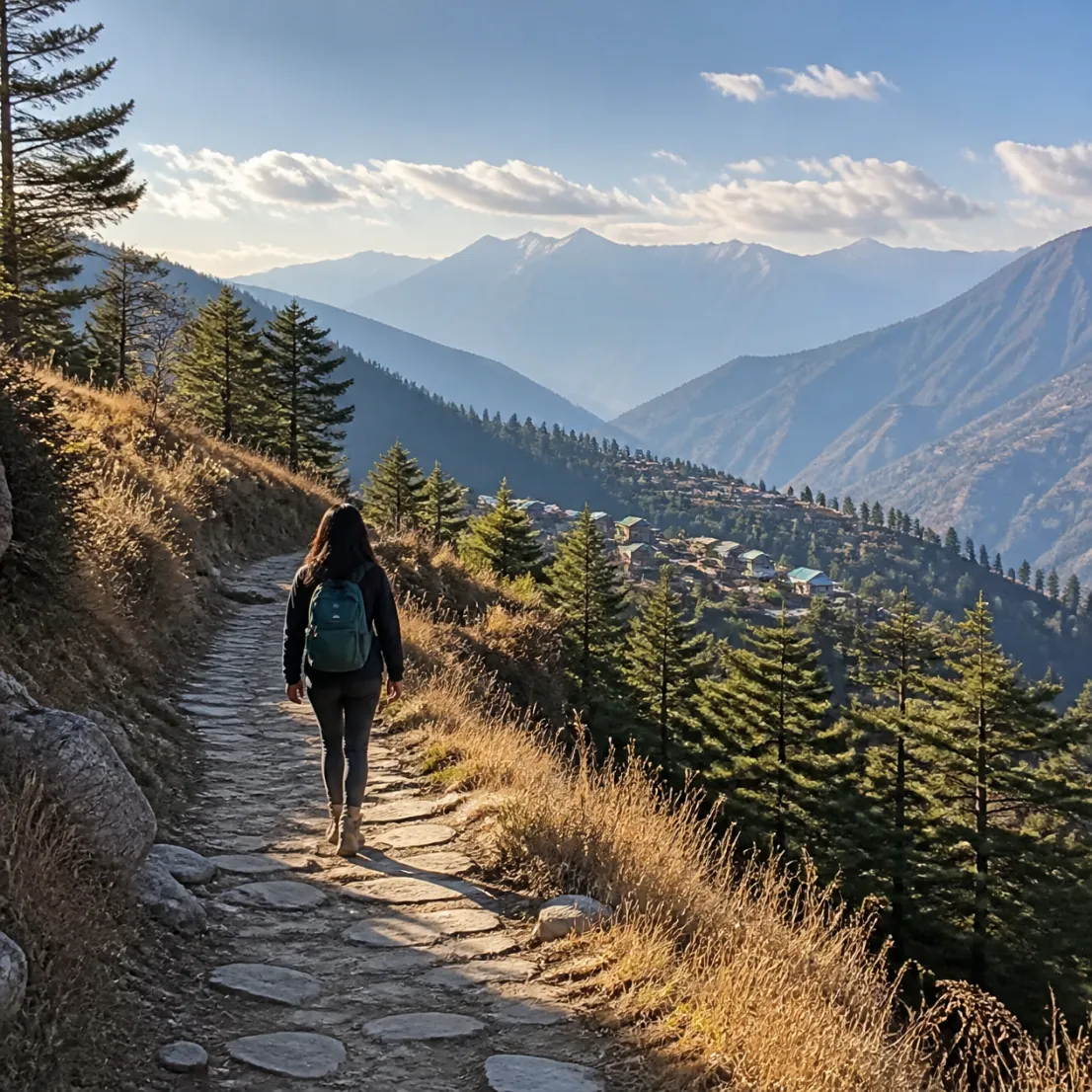
Where the forest gives way and the grass opens out - that in-between hour, when the trees fall behind and the walker comes out into the first great bowl of green - is when you understand what the ascent was paying for. From Bedni bugyal at its grass height the great peaks stand in an arc: Trishul close and colossal to the right, Nanda Ghunti beside it, and beyond them the far raked walls of the Nanda Devi sanctuary wall. The meadow bends gently toward the Bedni Kund (a small round tarn, sacred as the spot where the goddess rests) at its centre, and the whole composition sits under open sky like a cathedral built by nobody on purpose.
The summer itself is work wearing the costume of grandeur. First light is real work: the herds move early, because sheep have known for centuries that the sweetest grass is the dew-heavy grass, and the shepherd long ago stopped arguing with the sheep. By ten the mist has burned off, and the meadows run at full volume with their peaks banked around them like honoured guests. The day's business is milk, wool, curd, and the endless smaller operations of the chhani - the flat-roofed shepherd hut - where the floor smells of ghee, juniper smoke, wet wool and hot work, and the day ends when the animals end it, not when a clock says so. Between camps the distances are measured in walking-hours, and everybody knows them: it is two hours to water, half a day to the next chhani, a full day to the pass. Distance up here is not measured in meters, but in the energy of the animals.

September brings haying again, as it has for centuries and centuries: the great cut, when families from the same hamlets work the meadow like one farm, swinging each long bay of grass into stacks that from the next ridge look like sleeping animals themselves. And here the unwritten law of the hills is at its firmest. Cut only what is old. Never uproot. Never cut past your customary line. Never cut a slope facing your neighbour's stack scythes into view. The bugyal has no fences, no stones, no generous benefactor in any revenue-office; it has something much older and much stricter - a law everybody knows because it was made by people who depend on it, and renewed every single season by the very people it binds.
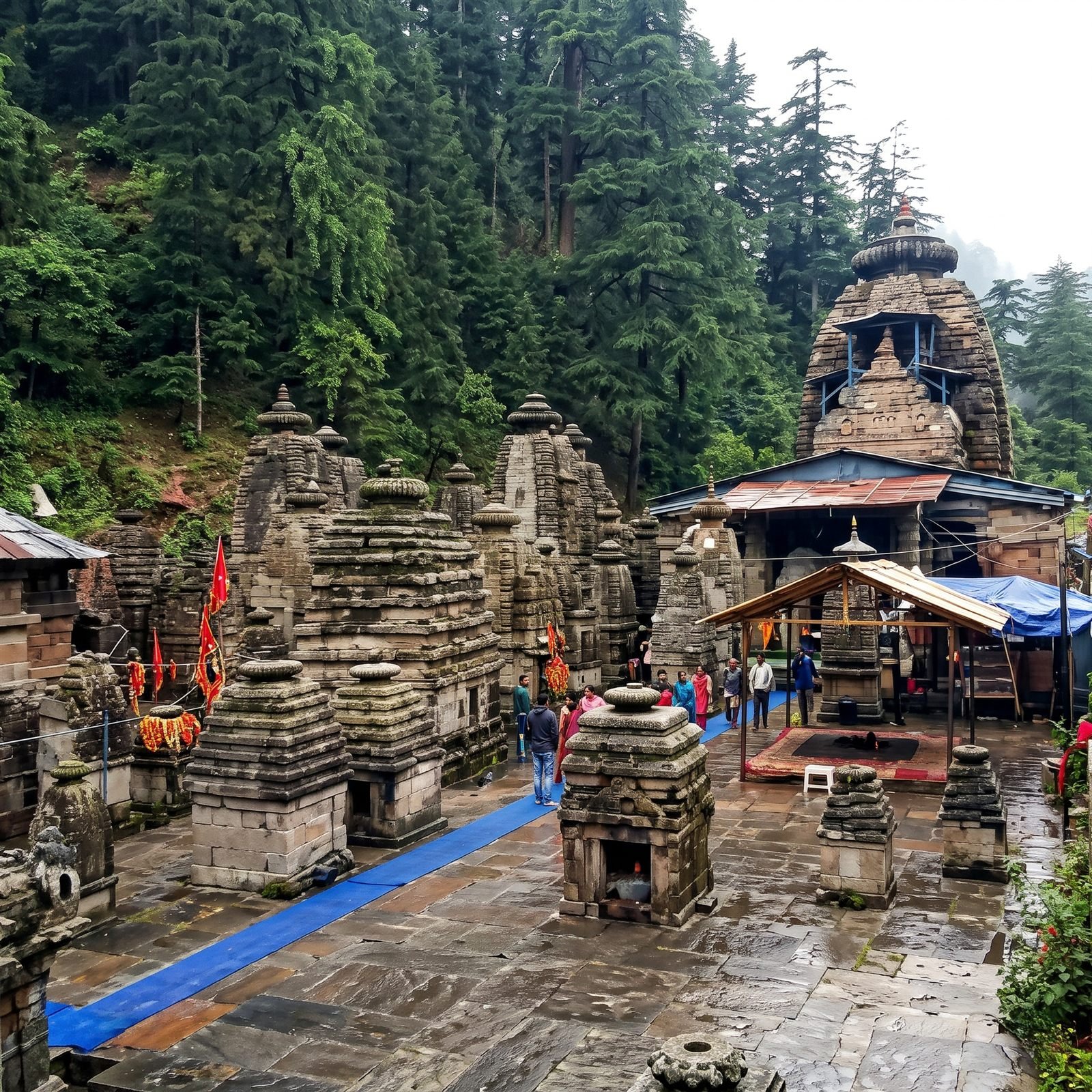
October is the leaving. The same road runs down; the lambs are heavier than they were in spring; the year's grass is folded into the valley as winter fodder and fire-filler. The bugyal goes quiet - a quiet nobody made and nobody patrols; the altitude, the wind and the season enforce it better than any fence could. And then one thing and only one thing interrupts this pattern, every twelve years: the Nanda Devi Raj Jat (the greatest ritual pilgrimage of the state, a three-week walk of thousands of pilgrims up to the high lakes at the mountain's shoulder). It crosses these grasslands: Wan, Bedni, Pathar Nachauni, Baguabasa. In the Jat years, Bedni is transformed: a tent city of the goddess Nanda's pilgrims, prayers, drums, chants and bells, the meadows crowded as a festival ground, and at the centre the priests offer the chhantoli (the ceremonial umbrella carried for the goddess) to her altar. Then the yatra passes, and the grasslands, and the living meadows return to their quiet, and move from the pilgrimage calendar back into the shepherd's calendar, as if they had simply been holding their breath.
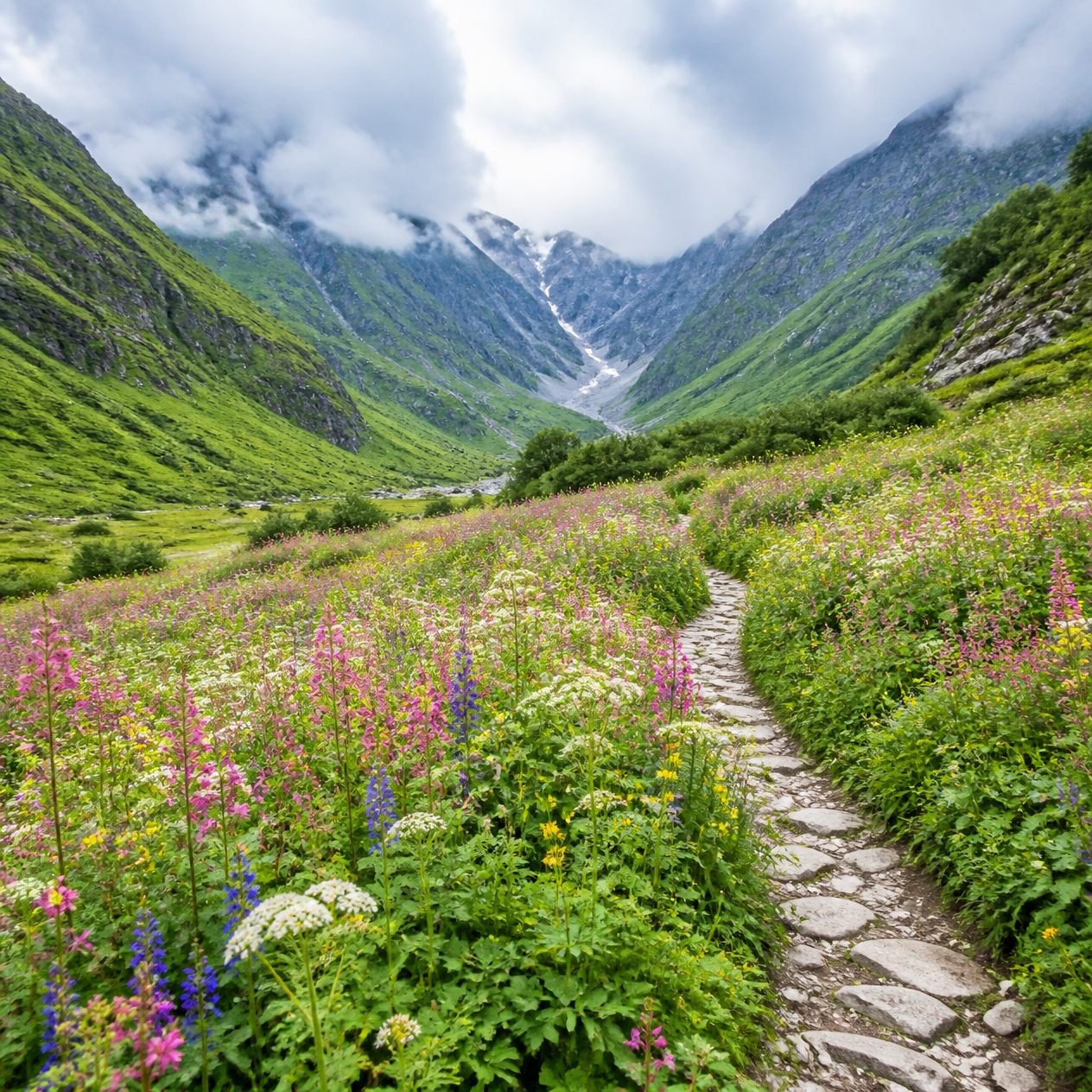
So when your trekking group crosses Ali-Bedni or walks up toward Roopkund, keep one thing honest in your heart: you are not walking an arbitrary trail built for travel agencies. You are on a herder's road, walked by hill families every year for centuries, and on a pilgrimage road walked by a civilization every twelve years for longer than that. The chhani you camp beside is somebody's summer house. Greet every shepherd as greeting deserves - stall by stall, family by family, with your hands in front of you and your manners above you. Wear down everything you carry up. And if you want to see a bugyal in its grandest festival dress, time your trip for August on the Valley of Flowers trail, where the same meadow logic runs wild with colour. And when the meadow goes quiet around you in the evening, thank your stars: the sound of nothing at three thousand three hundred meters is the sound the hills made before anyone was counting.
“The bugyal has no fences, no stones - it has something much older: a law made by people who depend on it.”
“Distance up here is not measured in meters, but in the energy of the animals.”
Questions
Questions people ask about this story
What is a bugyal?
A bugyal is a high-altitude grassland in Uttarakhand that rolls open above the treeline. It is not scenery but working land: for centuries hill families have moved their herds up each summer, and the meadow grass becomes the winter fodder that feeds the household below.
Which are the most famous bugyals in Uttarakhand?
Ali and Bedni bugyal in Chamoli, Garson bugyal, and the Auli meadows are the best known, along with the grass countries trekkers cross on the Roopkund and Valley of Flowers routes.
When is the Nanda Devi Raj Jat yatra held?
The Nanda Devi Raj Jat is held once every twelve years, and its route crosses the great meadow country itself: Wan, Bedni, Pathar Nachauni and Baguabasa, before climbing to the high lakes.